nemoearth
CLIMATE ACTIONClimate action · intelligence · opportunity
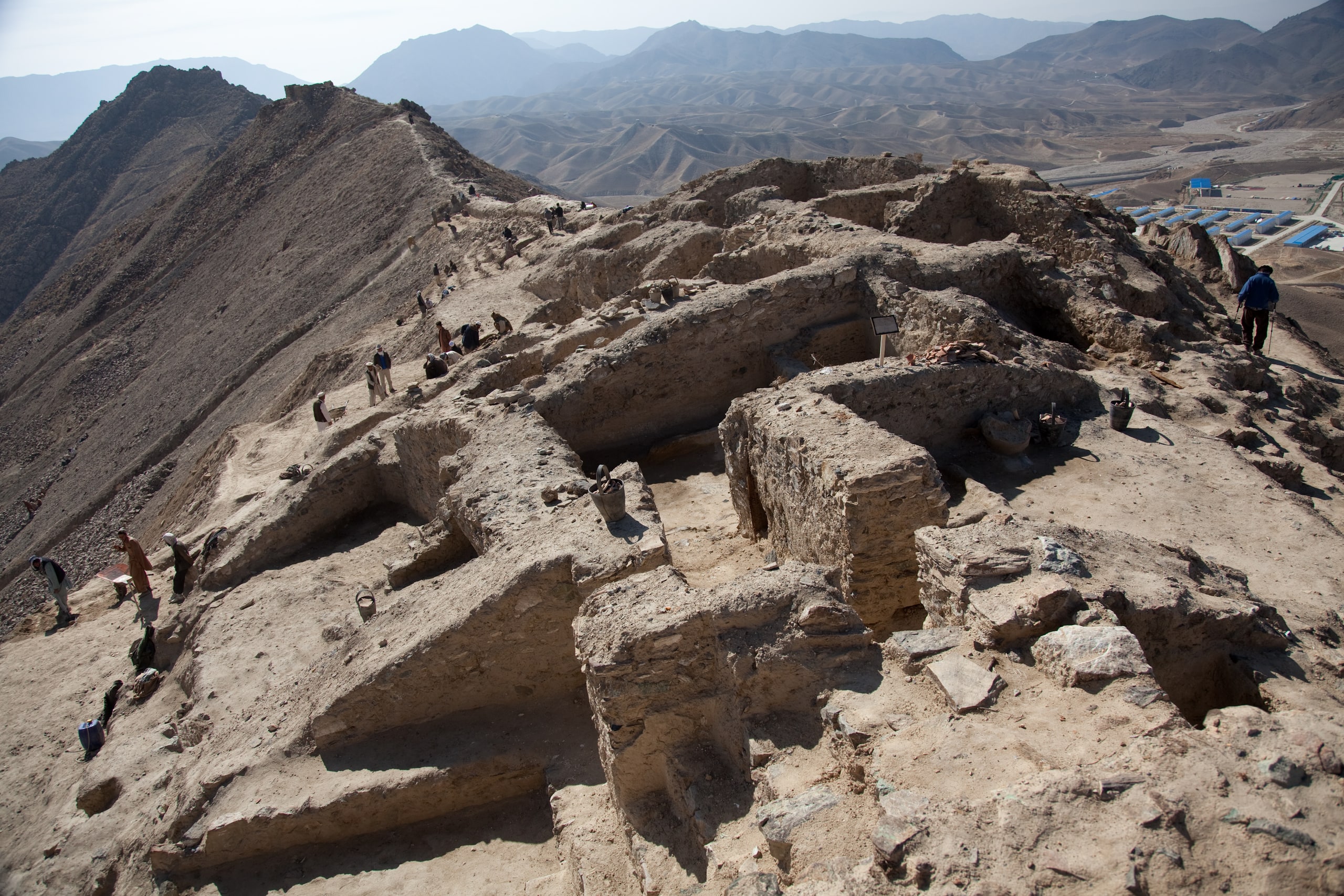
Weathered stone ruins of the ancient Mes Aynak Buddhist settlement lie across a dry, rocky hillside in Afghanistan.
THE COUNTRY ATLAS / AFGEXPLORE · UNDERSTAND · BEGIN

Middle East, North Africa, Afghanistan & Pakistan · Southern Asia · Low income

Afghanistan.

Islamic State of Afghanistan

Explore opportunities

COUNTRY OVERVIEW

Climate priorities in Afghanistan

Afghanistan’s national climate ambition commits to: 13.6% reduction in GHG emissions by 2030 compared to a business as usual (BAU) scenario, conditional on external support

Annual emissions
31.5 Mt
Net zero target
Not stated
Target year
2030
Project pathways
07

01 / CHOOSE YOUR CONTEXT

Where could your idea take root?

Explore Afghanistan’s sovereign boundary. Practical climate projects begin with understanding local land, water, and community tenure.

The map loads as you approach it.

YOUR LOCAL CONTEXT

Explore Afghanistan, one place at a time.

Select an area on the map or use the search. Open its local facts, administrative context and next field checks.

PEOPLE & THE LIVING LANDSCAPE

Understand the numbers.
See what changes.

A national picture of Afghanistan. Select a measure, explore the years and follow the original sources.

National observations
Census on file · 197913,051,358

Excluding nomad population. Data refer to the settled population based on the 1979 Population Census and the latest household prelisting. The refugees of Afghanistan in Iran, Pakistan, and an estimated 1.5 million nomads, are not included.

Read census source

Population through time

Annual population estimates. The census is a separate count.

43,844,1112025 · people
Population in Afghanistan, 1990 to 2025National source observations. Gaps in the line mean missing years. Use the year slider to read exact values.023.68M47.35M1990200820251990: 12,045,660 people1991: 12,238,879 people1992: 13,278,974 people1993: 14,943,172 people1994: 16,250,794 people1995: 17,065,836 people1996: 17,763,266 people1997: 18,452,091 people1998: 19,159,996 people1999: 19,887,785 people2000: 20,130,327 people2001: 20,284,307 people2002: 21,378,117 people2003: 22,733,049 people2004: 23,560,654 people2005: 24,404,567 people2006: 25,424,094 people2007: 25,909,852 people2008: 26,482,622 people2009: 27,466,101 people2010: 28,284,089 people2011: 29,347,708 people2012: 30,560,034 people2013: 31,622,704 people2014: 32,792,523 people2015: 33,831,764 people2016: 34,700,612 people2017: 35,688,935 people2018: 36,743,039 people2019: 37,856,121 people2020: 39,068,979 people2021: 40,000,412 people2022: 40,578,842 people2023: 41,454,761 people2024: 42,647,492 people2025: 43,844,111 people

NATIONAL CLIMATE SNAPSHOT

Country outlook

National emissions, stated ambition, registry activity and finance needs for Afghanistan.

STATED NDC TARGET

Conditional NDC only

13.6% reduction in GHG emissions by 2030 compared to a business as usual (BAU) scenario, conditional on external support

Measured progress unavailable · compatible baseline series needed.

Source: First NDC · 23 Nov 2016

CARBON CREDITS REPORTED

0Issued
0Retired
  • Issued0
  • Retired0

Cumulative tCO₂e totals · 2 listed projects.

CARBON PROJECT LANDSCAPE

  • Biochar1
  • Landfill Methane1

Leading activity types · listed project count

NDC FINANCE NEEDS · USD BN

ConditionalUnconditional
  • Total17.41 / —
  • Mitigation6.62 / —
  • Adaptation10.79 / —

Published needs · conditional / unconditional. These amounts are not committed funding.

UNFCCC NDC records ↗Berkeley registry database · Aug 2026 ↗

Exact registry totals: 0 credits issued and 0 credits retired.

CARBON MARKET COOPERATION

Article 6 readiness

0 / 5 milestones reported
Host-approved activities
0
Registered activities
0
Article 6.4 credits
0
Article 6.2 activities
0
Process, agreements & activity
  1. Designate a national authority for the Paris Agreement Crediting MechanismNot yet, according to the pipeline
  2. Publish host participation requirementsNot yet, according to the pipeline
  3. Sign a bilateral agreement with a buying country (Article 6.2)Not yet, according to the pipeline
  4. Set up a cooperative approach and authorise it (letter of authorization)Not yet, according to the pipeline
  5. Transfer the first authorised units (ITMOs)Not yet, according to the pipeline

UNEP-CCC Article 6 Pipeline ↗Updated 13 October 2026
CARBON PROJECT TRACKER & INTERACTIVE DESIGN STUDIO · AFG

Explore carbon project records, and design what is possible next in Afghanistan.

Inspect every voluntary carbon market project listed in Afghanistan, check methodologies and credit issuances, and build an actionable pipeline of potential carbon projects ready to design in your workspace.

Listed carbon projects
2
Across Verra, Gold Standard, ACR, CAR, ART, Isometric
Total Credits Issued
0
Registry-reported tCO₂e
Total Credits Retired
0
Permanent retirements
Potential Projects Pipeline
4 projects
100,022 tCO₂e/yr · $1,965,390/yr est.

Loading registered carbon projects for Afghanistan…

Registry data: Berkeley Carbon Trading Project Voluntary Registry Offsets Database (CC BY 4.0), covering ACR, ART TREES, CAR, Gold Standard, Isometric, and Verra (VCS). Potential project figures are indicative screening estimates for early project design; credit issuance requires site-specific baseline measurements, PDD validation by an accredited VVB/DOE, and registry verification.

03 / FIND A PRACTICAL START

What would you like to work on in Afghanistan?

Opportunity categories

Registry evidence

Municipal waste & circular economy

Implement municipal source separation, decentralized organic composting, and material recovery to divert municipal waste from open dumps and curb landfill emissions.

The registry summary lists Biochar and Landfill Methane. Historical registry activity does not prove current feasibility or future issuance.

National direction

13.6% reduction in GHG emissions by 2030 compared to a business as usual (BAU) scenario, conditional on external support Target type: Baseline scenario target. Target year(s): 2030. This is a general climate target; it does not name this opportunity's sector.

NDC source: First NDC · 2016-11-23

Evidence on file

  • The available NDC target text does not name this sector.
  • Relevant registry records: Biochar, 1 listed record, 0 credits issued; Landfill Methane, 1 listed record, 0 credits issued. Registry status varies; check the underlying records.

Practical next checks

  • Check whether the national plan or sector agency supports this activity and defines a usable baseline.
  • Review registry records for Biochar and Landfill Methane; confirm methodology, status, and local applicability.
More project context and diligence

People to involve

Municipal waste management departments and sanitation authorities · Informal waste collector associations and recycling cooperatives · Commercial compost operators, recyclers, and regional agricultural buyers

Additional first checks

  • What materials are generated, where, in what quantities and seasonal patterns, and how representative are the available measurements?
  • Who collects, recovers, trades, composts, recycles, treats, or disposes of these materials today, including informal workers?

Map context

Municipal waste collection shed and logistics mapping across Afghanistan, pinpointing transfer depots, material recovery facilities, and active disposal areas.

Check on the ground

  • Waste generation and composition study: Use a documented sampling frame and method to measure material categories, moisture where relevant, generation rates, and seasonal variation.
  • Material-flow and service map: Trace material from source through collection, recovery, treatment, rejects, and final disposal; distinguish formal and informal activity.

This adds editable country and activity suggestions to the private project form. Nothing is saved until you submit the form.

COUNTRY WORKSPACE

Continue with your next step

Carry the national context for Afghanistan into public funding, project and research records.

Before you start

Do I need a complete project?

No. Start with an activity and a place. You can mark any answer unknown; the nemoearth guide turns that gap into a practical task.

Does a map selection establish suitability?

No. Use the map to frame geographic context. Check the site, rights, participants, technology, and evidence with relevant local people.

Can Nemo help with my idea?

Your private project workspace works without an AI provider. When you sign in, you can start a feasibility assessment and collaborate with the team.

Sources & context

Country research sources

Explore the original documents and source tables. These references do not establish complete country coverage and do not add values to the map.

Official national records on file. Policy priorities and proposed opportunities remain separate from evidence for your project.

UNFCCC National Climate Submissions

United Nations Framework Convention on Climate Change (UNFCCC) Registry. Official submissions include 3 filings on record.

Latest submission: First NDC (2016-11-23) ↗

Natural Earth Cartographic Reference

Natural Earth Admin-0 sovereign states reference under CC0 Public Domain.

Sovereign geographic boundaries are provided for broad spatial context and do not imply endorsement of contested borders.

Article 6 Implementation Pipeline

UNEP-CCC Article 6 Pipeline database. Tracks Article 6.2 cooperative agreements, host country authorizations, and Article 6.4 PACM transitions.

Ask Nemo

Explore an opportunity, understand a method or plan your next project step with Nemo.

Open Nemo in your workspace Your conversations stay in your private workspace. Sign in if prompted.